
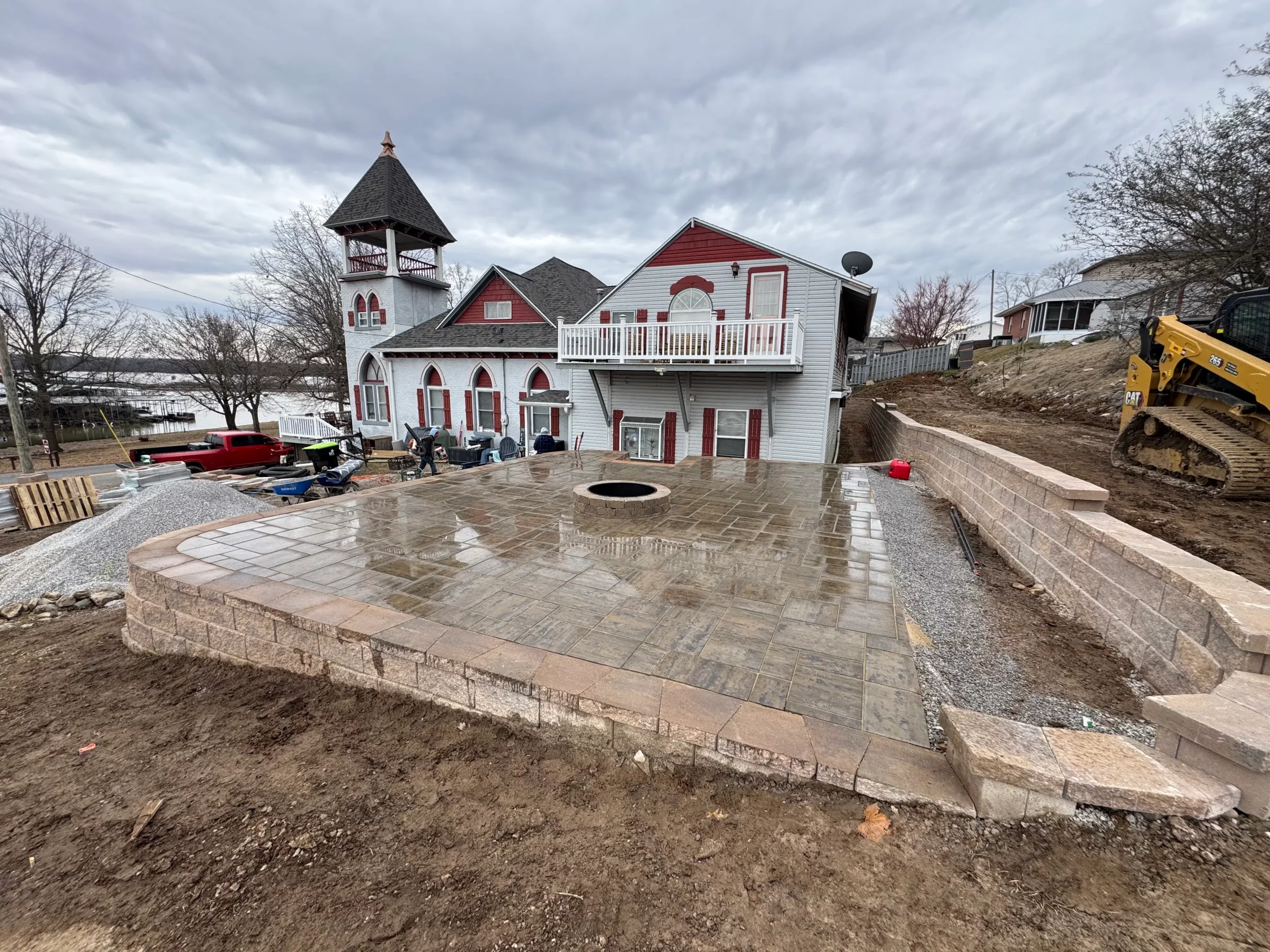
Winter does not automatically shut down hardscape installation in Western Kentucky.
It does change the schedule, the sequence, and the conditions a responsible contractor will accept. Some work can move forward during a cold-weather window. Other work should wait until the ground is workable and temperatures are stable.
That distinction matters.
If you are searching for hardscaping contractors, paver installation near me, or patio installers near me, the right question is not simply, “Can you build in winter?”
The better question is: What can be built correctly right now, and what should be scheduled for spring?
The Muscle is booking winter work and early-spring slots across Western Kentucky, Southern Illinois, and Northern Tennessee. Call (270) 248-9790 for a site assessment and an honest answer.
/ Dept 01: Cold Weather Changes the Ground
Temperature matters, but wet clay is usually the bigger problem.
Air temperature is only one part of winter hardscape installation. Soil temperature, recent rainfall, ground saturation, and freeze-thaw conditions all affect whether a site is ready for excavation and compaction.
Western Kentucky clay soils can hold water for a long time. When that clay is wet, it becomes soft, sticky, and difficult to compact. Heavy equipment can rut the site, and aggregate placed over unstable soil may not perform as intended.
Frozen ground creates a different problem. Frozen soil can feel firm on top while remaining unsuitable beneath the surface. Once it thaws, the ground can soften and move. Compacting frozen soil or placing a base over it is not a shortcut to a stable installation.
Freeze-thaw cycles create additional movement. Water beneath an unprepared surface freezes, expands, and pushes upward. When the ground thaws, the surface may settle unevenly. That is how patios, walkways, driveways, and walls begin to shift, sink, or separate.
The goal is not to work through every condition. The goal is to work when the site can support the installation.
/ Dept 02: What Can Be Built This Winter
Winter work is possible when the ground, drainage, and project sequence line up.
Depending on site conditions, the following work may be completed during cold weather:
-
Site evaluation and project planning
We can review grades, drainage, access, soil conditions, existing walls, and how you plan to use the space. -
Design and material selection
Winter is a practical time to choose pavers, wall systems, colors, patterns, caps, steps, and outdoor living features before spring demand increases. -
Excavation and grading
Excavation, dirt work, and grading may proceed when the ground is not frozen or saturated. Unsuitable soil, roots, organic material, or unstable clay can be addressed when conditions allow. -
Aggregate base preparation
A properly excavated and compacted base is the foundation of a durable hardscape. Aggregate should be installed in controlled lifts and compacted before the next layer is placed. -
Retaining wall construction
Retaining wall work may continue through suitable winter windows when excavation, base preparation, drainage stone, backfill, and reinforcement can be installed correctly. -
Drainage correction
Winter can be a smart time to address grading problems, standing water, downspout discharge, French drains, catch basins, or other drainage concerns before spring rain and snowmelt test the property. -
Land clearing on suitable sites
Clearing and access work can sometimes be completed while vegetation is dormant, provided the site can support equipment without unnecessary damage or rutting. -
Spring project scheduling
Even when final installation must wait, design, material ordering, site preparation, and scheduling can happen now.

/ Dept 03: What May Need to Wait
Honest scheduling protects the work and your investment.
Not every hardscape installation should be completed in winter. A responsible contractor should pause when conditions prevent proper construction.
Final paver installation may need to wait if the subgrade is frozen, the clay is saturated, or the base cannot be compacted consistently. Jointing materials and finishing details also require appropriate conditions. The same applies to any work that depends on stable ground, clean edges, reliable drainage, or proper curing.
A winter project may be completed in phases:
- Evaluate and design the project now.
- Complete excavation or drainage correction during a workable window.
- Prepare and compact the base when the ground is suitable.
- Pause if conditions deteriorate.
- Finish pavers, caps, steps, or other details when the spring installation window opens.
That is not a failure of planning. It is quality control.
The wrong contractor forces the calendar. The right contractor works with the site.
/ Dept 04: The Base Is the Difference
Pavers do not fail because winter exists. They fail when water and movement are ignored.
A hardscape system needs more than attractive surface material. It needs a prepared foundation that can handle moisture, loading, and seasonal movement.
A cold-weather installation should account for:
-
Excavation depth
The excavation must remove organic material and unstable soil. Depth depends on the surface, expected loads, soil conditions, drainage, and frost exposure. Where required, the excavation and base must extend below the frost line. -
Geotextile separation
In Western Kentucky clay, fabric may be used to separate the soil from the aggregate base and reduce migration of clay into the stone. -
Compacted aggregate in lifts
Base material should be placed in controlled layers and compacted before additional material is added. One thick, loose layer is not the same as a properly compacted base. -
Positive drainage
Water needs a planned route away from the home and out of the hardscape system. Surface slope, underdrains, clean drainage stone, channel drains, French drains, and safe outlets may all be part of the solution. -
Edge restraint
Proper edge restraint helps keep pavers from spreading or separating under regular use and seasonal movement. -
Materials suited to the site
The paver, wall system, jointing material, and base design should match the intended use and local conditions.
For more on winter movement and surface durability, read our guide to paver driveways versus poured concrete in Western Kentucky.
/ Dept 05: Retaining Walls Need Water Control
The visible wall is only one part of the structure.
A retaining wall on a slope, beside a patio, or near a driveway has to manage soil pressure and water. Western Kentucky clay can hold moisture behind a wall, increasing pressure during wet periods and freeze-thaw cycles.
A proper wall installation may include:
- An excavated and compacted foundation
- A stable aggregate base
- Correct wall setback and alignment
- Clean drainage stone behind the wall
- A drainpipe and suitable discharge route
- Reinforcement where the height, slope, soil, or loads require it
- Final grading that directs water away from the wall
Material selection should follow the site requirements. Our retaining wall material guide explains how block, natural stone, and timber compare for slopes, drainage, lake properties, and outdoor living areas.
If your wall is already leaning, bulging, separating, or showing signs of erosion, winter is a good time to request an evaluation rather than adding soil or landscaping over the problem.


/ Dept 06: Lakefront Properties Require More Planning
Kentucky Lake and Lake Barkley properties often combine steep grades, limited access, and serious drainage demands.
A lakefront patio, walkway, or retaining wall cannot be planned from a material sample alone. The design may need to account for slope, runoff, shoreline exposure, changing grades, access for equipment, erosion, and how water moves across the property.
Winter planning gives you time to evaluate the complete site before spring construction begins. That can be especially valuable when the project involves a raised patio, terraced yard, retaining wall, or outdoor living area near Kentucky Lake or Lake Barkley.
Our drainage solutions guide explains why grading, downspouts, catch basins, French drains, and safe outlets should be considered together, not as separate fixes after the hardscape is installed.
/ Dept 07: Why Start Now?
Spring is when many homeowners begin calling. Winter is when you can get ahead of the rush.
Starting the conversation now can help you:
- Get an earlier site assessment
- Compare materials before peak-season decisions
- Identify drainage or grading work before spring runoff
- Complete suitable preparation during winter weather windows
- Order materials and plan the installation sequence
- Reserve an early-spring slot before the schedule fills
The Muscle is a Unilock Authorized Contractor. For your project, that means access to Unilock materials and manufacturer-backed support, subject to the applicable product and installation requirements. It gives you another layer of confidence when selecting a paver or wall system for your property.
Our team stays involved from the initial site review through the installation. We are insured, professionally trained, and accountable for the workmanship behind the finished project.
The Muscle provides a 2-year workmanship warranty covering our installation workmanship. It does not cover failures caused by others’ construction, missing or blocked drainage, roots, or structural changes made after our work.


/ Next Step: Find Out What Your Site Can Support
You do not have to wait until spring to start moving forward.
Call (270) 248-9790 and ask us to assess your project. We will explain what can reasonably be completed this winter, what should wait for a better installation window, and how to get on the winter or early-spring schedule.
No pressure. No obligation. Just a straightforward conversation about your space, your goals, and the right way to build it.
You can also visit The Muscle Landscaping to request an assessment.